Showing posts with label PhD. Show all posts

16/10/2011

Zango

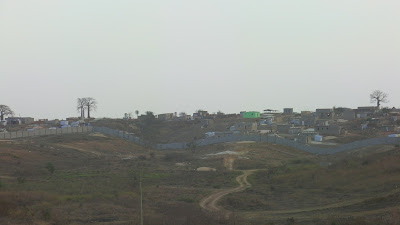
I visited Zango (I, II, III and IV) today, an incredibly big area with thousands of houses 60 Km away from Luanda. Zango's houses were by the government with the intention of housing those who, for some reason, have been evicted from their houses. From what I understood, Zango was built in 4 different phases. In fact, Zango IV is still under construction and people have only just started to move in. This allowed me to see different stages of the process, from construction to post-occupation. Interestingly enough, the houses from Zango I (the first ones to be completed) have all been altered by the occupants to meet their different needs. For this reason, most of the times it is difficult to see the original house behind the walls, extensions, trees, plants, etc.. 

Zango IV, on the other hand, is still mostly unoccupied and the houses are nothing but empty shells in the middle of nowhere. It makes you wonder whether these houses were built for human occupation in the first place... I am sure that with time the place will look better, though.

 House from Zango I


Zango IV

14/10/2011

One week to go

Half of the day was completely lost... I was supposed to have an interview in the morning with someone in the National Housing Institute but, unfortunately, he had to postpone to Monday... Couldn't do much at DW today either. With only one week left here I feel that I am a bit behind on my work, and fear that I will not be able to achieve what I planned, especially in terms of interviews to people from the musseque. Now I see how helpful it would have been to have had some research assistants...
It's almost impossible to plan these things from a distance. You can never truly predict what is going to happen. For example, it is incredibly hot every single day, which means that after only three interviews I am completely tired. In the city centre, where I have been almost every morning, it takes ages to get everywhere because of traffic. Also, even you you have a meeting at a certain time you usually have to wait a bit (often more than a bit...) longer until people are available to talk to you.
And last, but not least, as there does not seem to exist such thing as a quiet night, I haven't slept properly since I arrived – I am not exaggerating :).

Next week I hope to visit one of the new cities built from scratch in the outskirts of Luanda. Everyone has been telling me so many interesting things about it during the interviews, that I really want to see things for myself. This idea of building an entire city where there was literally nothing is very interesting for me as an architect. In this case I am particularly interested in the architectural solutions adopted for the low-cost housing. I'll post some photos if I manage to go there.

Tomorrow the plan is to visit other musseques (Cazenga, Rangel and Sambizanga), so I am looking forward to it!!

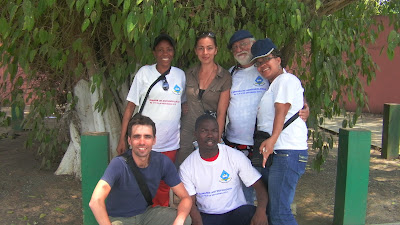
In the meantime here are some photos taken over the last days here in Chicala.


12/10/2011

An update

The last few days have been very productive. Fortunately, I finally managed to get hold of some of the people I have been trying to contact since I arrived. The interviews I have carried out so far have been a vital tool to identify various issues related to my research.
The focus group I did with the architecture students was definitely one of my favourite moments! It was very interesting to understand the students' perspective on some of the problems currently affecting Luanda's bairros. They seem to be fully aware of these issues and also wish to be part of a solution as future architects. It gave me hope knowing these students will be able to actively participate in the much needed reconstruction of their country in just a few years.


Also a few days ago we had a very interesting moment in Chicala. During the seminar on urban development, which took place at University Lusíada of Angola, I had the pleasure of meeting Axel Koschany, a German architect with 20 years of professional experience and with an assumed interest for dynamics of informal settlements. His lecture, entitled 'Global becomes Lobal becomes Glocal', was thoroughly enjoyed by myself as well as by everyone else in the room. We had a nice chat afterwards about the issues he had addressed and so I decided to propose a challenge – visit Chicala! Axel immediately said yes and ended up bringing two more people with him, Filip de Boek and Ann, two anthropologists who were also in the seminar.
Next day we picked them up from the city centre and came back to Chicala where we spent a nice few hours walking around the bairro. We had a really nice time!Axel is now back to is work in Germany but I hope he still carries in his heart what he has experienced here in Chicala. And of course, that such experience can also somehow positively inform his professional practice.

I really wish more people could visit such places and demystify the false ideas constructed around them. If all goes well – and I get to do enough interviews by then – probably I will invite the Portuguese architects I met during my first week in Luanda for lunch this Sunday.
It's my last weekend so I need to prepare something special :)

04/10/2011

Pedras no caminho? Guardo todas, um dia vou construir um castelo…

Luanda was so hot today! I always thought that being Portuguese would make me stand the heat, but this is too much! I spent all morning jumping between different government delegations and nearly fainted from the heat. A woman saw me resting in front of the Provincial Government of Housing and asked me what I was doing there. When I said I wasn't feeling well she just answered “Oh, of course, you are not from around here...” :)

Luanda is not a pedestrian-friendly city, the car is used to go everywhere, whether far or close, which contributes for the craziest and most chaotic traffic one can imagine. This influences a lot the general notion of distance. When I was asking for directions to certain places people always answered “It's just there around the corner”... Right... 30 minutes later and I do not know how many metres later I'd eventually arrive.

Unfortunately things didn't go very well today. I never managed to get hold of the people with whom I was supposed to talk to. They were either on vacation, in a meeting, or who knows what else.

To be honest, today I feel slightly demoralized, and a bit homesick... I never expected that this would be a simple task, but the fieldwork has been far more complex than planned. There are many barriers to access information and, above all, the fact that there exist so many problems associated with the theme of my research makes focusing on one aspect extremely difficult. Hopefully I'll feel better tomorrow.
I always remember Fernado Pessoa whenever I find an obstacle on my way - 'Pedras no caminho? Guardo todas, um dia vou construir um castelo… ' ( 'if I have rocks on my way, I shall keep them all. Someday, I will build up my own castle…)


Just to finish, below is an interesting image showing how people build their houses everywhere, even on top of existing buildings.


03/10/2011


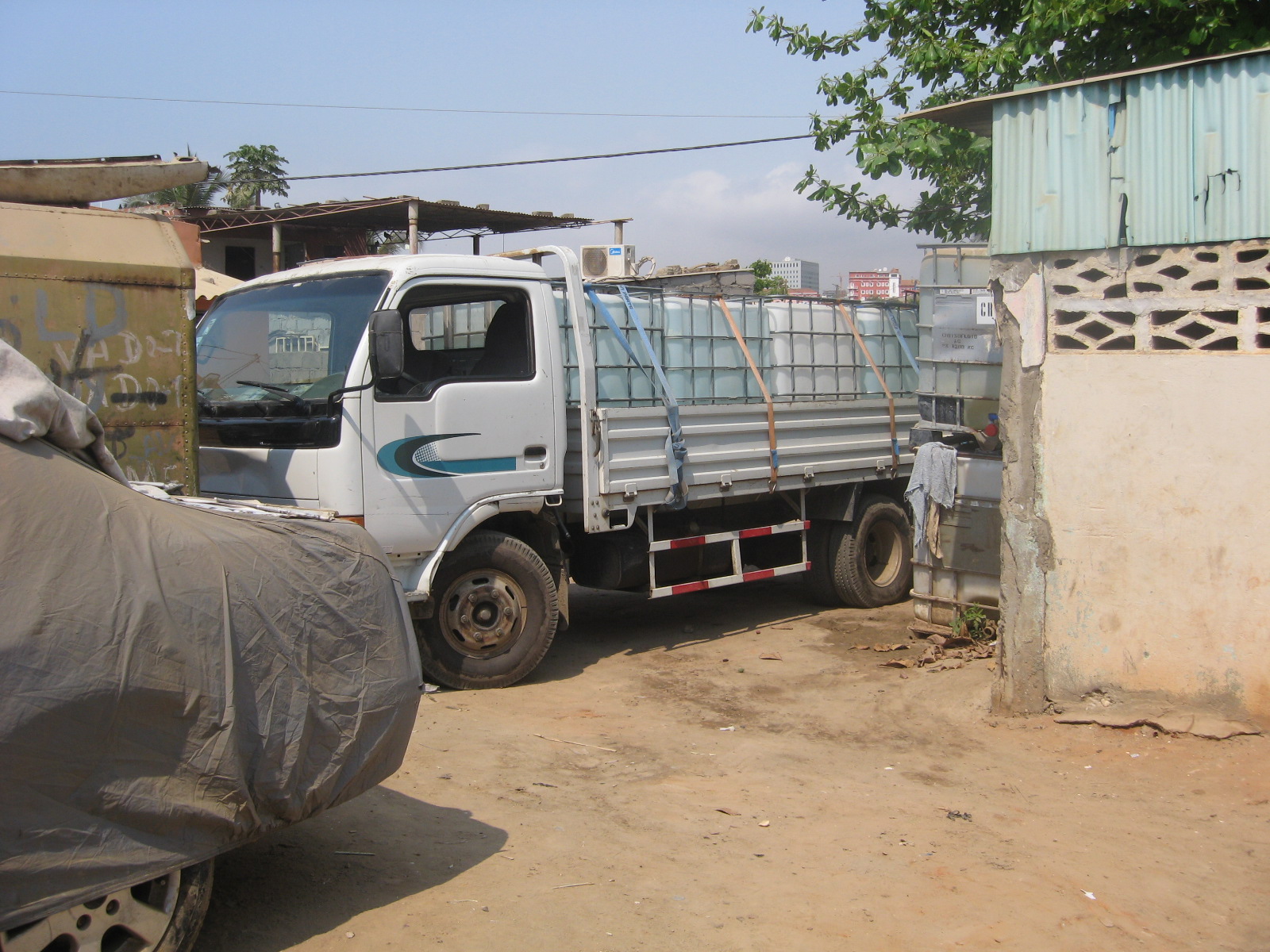
 Distribution of water.1000 litres cost approximately 20 dollars


 This is one way people get rid of waste, by burning it.


I don't intend to begin all my posts with the power status in the bairro, but I can't help doing that today... There is no power, nothing, nada, rien!! It's interesting to see how people here have learnt to deal with this quite well over the years. Yesterday, L.D. - who has always lived in Chicala – was telling me that this area until recently was not covered by this infrastructure at all. He said something about the government providing energy to bairros close to elections time...

Chicala is lacking many things. One has to live here to understand the dynamics of both people and space and how they manage to cope with all sorts of problems. And I am not just talking about the poor access to the bairro and people's houses, the complete lack of water, the constant blackouts, and the low quality of the built environment, it goes way beyond that. This particular area, as well as others in Luanda, is changing rapidly and people here are aware that, sooner or later, everyone will have to move out of Chicala. Where to? No-one seems to have an answer for that just yet. What they do know is that they will lose their current life, their references, livelihoods, and close contact with their neighbours and friends. Moreover, and because Chicala is so close to the city centre, the privilege of quickly getting to the city, where many of the people work, will also be lost.
I have been talking about this issue quite a lot with different people, and I can say that the feeling of uncertainty and insecurity towards their future is implicit in every word spoken.

A few days ago, I was told that this bairro will probably be demolished in about one year time (part of it is already gone). I can't help wondering what I will find here when I return to Angola, and where will these people be living...

I am still getting used to daily life here. Getting a full night sleep is particularly difficult, since there is always something happening somewhere - which usually involves music, or very loud music to be more accurate. Last night for example, there was another concert a few hundred metres from my house :) Of course there is no such thing as insulation or double glazing, so you hear pretty much everything as if it is happening inside your house. Oh, and let's not forget the noise coming from all the generators working at the same time when the power is off...
Last night I don't know why but I woke up at around 3am and could not sleep for another couple of hours... The nights are very hot and slightly uncomfortable, and all I could think about was how itchy the mosquito bites on my legs are!! I should probably try another type of insect repellent. The one I used in Ghana was completely useless and now I am beginning to think the same of the one I am currently using... I HATE MOSQUITOES!!!

On a more positive note, I was told about about 2 markets close-by where people usually buy all sorts of building materials to build their houses. Hopefully I'll manage to go there this or the following week, just to have a general idea of prices. From what I understand the only materials manufactured and sold within the neighbourhood are cement blocks. All the other stuff are mainly acquired in the markets.

01/10/2011

Some music

The music is still playing outside (non-stop and veryyyy loud since early this morning!!), and with so many things happening at the same time, I ended up not doing much today.
Yesterday, however, the day was quite productive. I spent about 5 hours at DW's office looking for documentation relevant for my research. They have so many interesting things! It's basically stuff which has been accumulated over the years, and given that DW has been in Angola for more than 20 years, well, you can imagine what I mean. Much of the information I was interested in was to do with the development of informal settlements in Luanda, and I was very fortunate to come across extremely useful things. It's a shame though, that many of those reports and papers are only phisically available here. Perhaps I should have come to Angola earlier so that I could have included some of the data in my literature review. Anyway, it's not a big problem, since I can always revise and add information. A PhD is only closed when one submits the final draft and I am very far from that!!
Oh, in addition to this, although at this stage I cannot provide further details, things are also beginning to point towards my return to Angola in January or February for at least another month.

I also went out for dinner with a few Portuguese who are working here. They are all either architects or engineers, so it was very interesting to get their views on the issues currently affecting the city.

Tomorrow I will most likely spend the day transcribing the interviews I have conducted so far and, if I still have a bit of time, continue with mapping the street.

Just to conclude this post, I left my favourite playlist in Oxford. and am beginning to miss the music I always listen to when I am working :( The internet connection is soooooooooo slow here but I still managed to listen to one of my favourites on youtube today – which made me very happy! So, I just thought I'd share it here :) Enjoy it!


29/09/2011

Lights out!


I landed in Luanda one week ago. In this short period of time – it feels much more than that – all sorts of things happened, but the result so far is very positive.
Today we experienced how it feels like to live without power. This area of Chicala was left in the dark (now I realise that it was a smart choice to buy a PC with a good battery life). Apparently the power cuts are very common here. The blackouts may range from few hours to days and there is little one can do apart from relying on a generator to keep the lights on after sunset.
Nevertheless, today was an interesting day. I spent the morning at Universidade Lusíada where I attended a lecture by architect Maurício Ganduglia with the theme "Characterization of Housing and Criteria for Comfort in Angola."
My first contact with Maurício happened when I was planning to visit Luanda in the beginning of this year, which unfortunately turned out not to happen. At the time, we talked about meeting up to exchange a few words about the work that he has been developing with local and natural building materials (mainly earth construction) in Angola. Now that I am finally in Luanda we will have the chance to catch up. In addition to that, my staying in Luanda coincides with the Universidade Lusíada's Academic Week, an event that aims to promote discussion and debate around various issues related to the built environment in Angola.

Maurício Ganduglia's lecture focused on the work and stusies on earthen construction recently carried out by the university and himself. This topic will be further discussed next week during the architecture forum. I am planning to attend so I shall bring this up again some time during next week.
By the way, during the lecture, before and after Maurício's intervention to be more accurate, there were two musical moments (as they put it) provided by a student and a teacher! Totally unexpected, but very interesting :) Nothing better to wake up the audience!
Tomorrow starts my week 2 in Angola. I'll return to Development Workshop's office for another meeting and hope to have time to go through some documents in their library.


Faz hoje uma semana que aterrei em Luanda. Neste curto espaço de tempo - que me parece já muito mais que isso - já me aconteceu um pouco de tudo, mas o saldo até agora é bastante positivo.
Hoje foi a vez de sentir o que é ficar sem energia. Esta zona da Chicala está às escuras (é nestas alturas que percebo que foi uma opção inteligente comprar um pc com uma boa bateria). As falhas de energia são comuns, assim me dizem, por aqui. Os apagões vão de horas a dias e pouco mais se pode fazer do que contar com o gerador de apoio para manter a luz acesa após o do pôr-do-sol.
Apesar disso, este foi um dia interessante. Passei a manhã na Universidade Lusíada onde assisti a uma palestra proferida pelo arquiteto Maurício Ganduglia, com o tema “Caracterização da Habitação e Critérios para o Conforto em Angola”.
O meu primeiro contacto com o arquiteto Maurício aconteceu ainda na altura em que eu pensava vir a Luanda no início deste ano que, infelizmente, acabou por não se concretizar. Ficámos de nos encontrar para trocarmos umas palavras sobre o trabalho que tem vindo a desenvolver com materiais de construção naturais e locais (sobretudo a construção com terra) em Angola. Agora, uns quantos meses após o plano inicial, deu-se a feliz oportunidade da minha estadia em Luanda coincidir com a semana académica da Universidade Lusíada, onde se estão a debater questões ligadas à arquitetura em Angola. A palestra do arquiteto Maurício abordou o trabalho que a universidade e ele próprio têm levado a cabo no sentido de sensibilizar os alunos e a população em geral para a potencialidade de construção com materiais locais e naturais. Na próxima semana irá decorrer o fórum de arquitetura onde se dará continuidade a esta discussão. Darei mais notícias entretanto, pois conto estar presente.
Aproveito só para fazer uma nota. Durante a palestra, aliás, antes e depois da intervenção do arquiteto Maurício Ganduglia, tivemos direito a dois momentos musicais proporcionados por um aluno e um professor!! Totalmente inesperado, mas muito interessante :) Nada melhor para fazer acordar audiências (e que acordados estavam!)!
Amanhã começa a semana Dois em Angola e o dia avizinha-se igualmente rico. Volto à Development Workshop para mais uma reunião e para consultar o fantástico arquivo de documentação que possuem na sua sede em Luanda.


25/09/2011

In and around Luanda II


I can hear music coming from outside. In fact, there's always music in almost every corner of this neighbourhood, regardless of the time.5 am, 10 pm, it really doesn't seem to matter.
This spirit is contagious! We were told that the Angolan people faithfully follows the goal of constantly celebrating life, and that everything is an excuse to dance and partying, despite the adversities they face. These words left me with a smile on my face and reflecting on the lessons that some people in Northern Europe could take from this ...

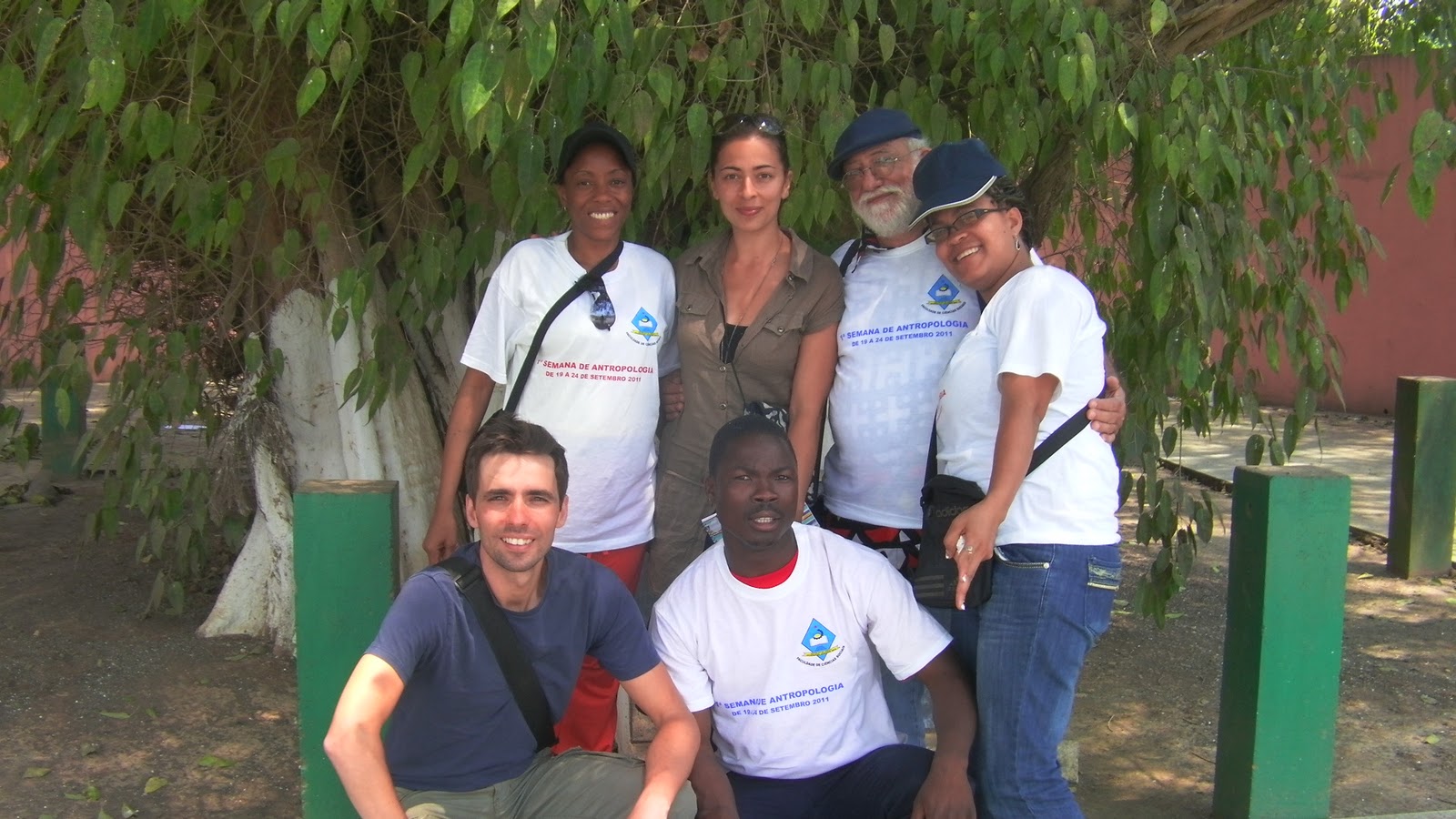
Yesterday, Dr. Samuel Aço, a professor of anthropology at the University Agostinho Neto, gave us a tour of some areas of Luanda. In the morning we joined a field trip organised by the university as part of the conference Week of Anthropology. The morning session's main theme was to do with the Mulemba tree and its role in the historical identity of Angola. The Mulemba we visited is located just outside Luanda and , according to Professor Virgílio Coelho – who gave a lecture in the morning -, this is a a very ancient tree whose meaning is deeply associated with fertility, power, wisdom, the bridge between the world of men and their ancestors, amongst others. Today, the location of this tree became almost a point and destination of pilgrimage, searched by those wishing to ask for the protection of their ancestors or simply those seeking good fortune in their lives.
After a long photo session and a lunch that appeared spontaneously fromone of the student's car, the class ended and the students headed back home. Our day, however, was still far from over. We went to visit the outskirts of the monumental city that is Luanda. A mixture of huge areas of informal settlements and planned residential buildings of several floors (many still empty) form the landscape of peri-urban Luanda, although the former clearly represents the vast majority. It is hard to miss the monochromatic grey tones of the cement blocks and metal roofs, only occasionally interrupted by the odd façade painted in vivid colours - often mentioning the business done there. Even the red earth, which is in the origin of the term musseques, is disappearing under the dense fabric of Luanda's musseques.
Dr. SA explained how the war, which ran for more than 30 years, played a major role or even decisive in the evolution of the construction of housing and the way space was generally lived and understood in Angolan cities, but particularly in Luanda. What we saw yesterday illustrates exactly this idea. The rural-urban mass migrations that characterized the years of conflict in Angola created the rapid need for shelter. This inevitably dictated the beginning of the phenomenon of peri-urbanisation, today so overwhelmingly spread that one loses completely the notion of beginning, middle and end.

These buildings also bear witness to the the way people have been building since the first generations first settled in the musseques. The wattle-and-daub and adobe construction techniques - technologies derived from rural areas - still survive, but only in the oldest structures, while the most modern display cement blocks and metal sheet roofs. According to S.A., the technology of building with earth is now as good as lost and, although one can easily make adobe if one wishes, the skill of building good quality houses using adobe or mud-and-daub no longer exists. The vernacular is now very much associated with poverty and, if this trend persists, I would say that the very concept of Angolan traditional and/or vernacular architecture will have to be re-assessed ...

(It is very hot ... The music continues to play outside, now accompanied by the sound of a shovel mixing a cement mortar).

We drove some 40 kms away from the centre of Luanda, passed Cacuaco and stooped close to the Katari (not sure how to spell it) lake to contemplate the beauty of nature. There was no trace of the confusion of the city. The only sound we could hear was the wind whistling passing quickly through the grass and the fading whistles of the fisherman down at the lake, as if to say that they had not had any luck with catching cachuço. We met N., a man of a strong handshake who, with his two dogs, manages a piece of land with 13 hectares. "There is no food to feed the pigs" he said, "We are waiting for the rain to make things grow again.".

The sunset on the horizon was telling us that it was time to return. On our way back we took another route and passed through different neighbourhoods. The highway back to Luanda still smells like new! Everything is changing in the city, so it seems. The dozens of trucks driven by Chinese and overloaded with building materials we saw passing by, are obviously a sign of the current reality in Angola. The rapid development coexists literally side by side with the exponential growth of these musseques. They seem to have a life of their own and shape themselves forming an organic and dense urban fabric. And if the access to the city is a prime location to observe the meeting of these realities, the opposite also occasionally happens... One only has to look at the huge concrete walls along the motorway - wide enough to hide, or simply make people forget the existence of slums. What is that saying "out of sight ..."?

There is so much more to write, but for now I'll stop here. Let's wait and see what tomorrow brings.

Oiço música vinda lá de fora. Na verdade, parece sempre haver música em qualquer recanto aqui no bairro da Chicala, seja às 5 da manhã, seja às 10 da noite. Este espírito é contagiante! Ontem diziam-nos que o povo Angolano vive segundo este princípio de ser solidário, aberto, feliz, sempre a dançar e celebrar a vida. Isto tudo independentemente das adversidades que se lhes aparecem pelo caminho da vida. Estas palavras deixaram-me com um sorriso nos lábios e a refletir sobre as lições que se podiam passar para alguns povos do norte da Europa...

Ontem corremos Luanda e arredores na companhia do Doutor Samuel Aço, professor de antropologia na Universidade Agostinho Neto, e de um dos seus antigos alunos Isaías, hoje multifacetado nas artes da representação de teatro, cinema e televisão – e futuro antropólogo forense!. Juntámo-nos de manhã a uma visita de estudo organizada no âmbito da Semana da Antropologia, que teve teve como tema principal a Mulemba e o seu papel na identidade histórica de Angola. A Mulemba que visitámos fica localizada à saída de Luanda e, segundo o que nos foi transmitido pelo professor Virgílio Coelho, trata-se de uma uma árvore centenária que abarca desde há largos anos anos uma simbologia ligada à fertilidade, poder, sabedoria, a ponte entre o mundo dos homens e os seus antepassados, entre outros. O local onde se encontra hoje esta árvore, já de tronco e copa sobejamente majestosos, tornou-se quase um ponto de peregrinação e destino obrigatório de quem deseja fazer pedidos aos seus antepassados ou simplesmente trazer boas fortunas para as suas vidas.

Após uma longa sessão de fotografias e um almoço que apareceu espontaneamente da mala do carro de um dos alunos, a aula terminou e os alunos rumaram a casa. O nosso dia, no entanto, estava ainda longe de terminar. Daí seguimos para a visita aos subúrbios da monumental cidade que é Luanda. Uma mistura de assentamentos informais com espaços planeados que contemplam edifícios de habitação de vários pisos (muitos ainda por habitar) compõem a paisagem peri-urbana de Luanda, embora sejam os primeiros claramente a grande maioria. Ressaltam à vista os tons monocromáticos do tijolo de cimento e telhados de chapa metálica, ocasionalmente interrompidos por uma ou outra fachada pintada a cor viva ou com anúncios de um negócio que se faz por ali. Até já a terra avermelhada, que deu o origem ao termo musseque que hoje se conhece, se vai escondendo por entre a malha densa dos musseques de Luanda. O Dr. S.A. explicava-me como a guerra, que se desenrolou por mais de 30 anos, desempenhou um papel preponderante ou mesmo decisivo na evolução da construção e vivência da habitação nas cidades Angolanas, mas sobretudo em Luanda. O que vimos pelos bairros ontem ilustra exatamente essa ideia. Os movimentos migratórios que caracterizaram os anos de conflito em Angola, trouxeram muita gente para Luanda, de tal forma que a necessidade de criação de abrigo ditou inevitavelmente o início do fenómeno dos bairros peri-urbanos, espalhados por uma extensão de perder de vista no horizonte... Uma escala perfeitamente esmagadora e impressionante, onde se perde por completo a noção de princípio, meio e fim.

As construções contam também a história dos saberes das várias gerações que se foram instalando e por ali ficando. O pau-a-pique e adobe, tecnologias oriundas das realidades rurais, sobrevive ainda nas estruturas mais antigas, enquanto as mais modernas ostentam já o bendito tijolo de cimento e a chapa de zinco. Dizia-me o Dr. que as tecnologias de construção com terra se perderam, e que embora se possa facilmente fazer adobe se se desejar, já não se sabe construir com qualidade usando adobe ou pau-a-pique. O vernacular está então agora associado a pobreza e, muito provavelmente, se esta tendência perdurar, o próprio conceito de arquitetura vernacular ou tradicional de Angola terá de ser repensado...

(Está muito calor...A música continua a tocar lá fora, agora acompanhada pelo som do roçar de uma pá na feitura de uma mistura de argamassa de cimento).

Afastámo-nos uns 40 kms do centro de Luanda, passámos o Cacuaco e parámos junto à lagoa Katari (será escrito assim?) para contemplar a beleza da natureza. Deixámos para trás a confusão da cidade. Ouve-se somente o assobiar do vento que passa rapidamente por entre o capim e os assobios do pescador lá bem em baixo na lagoa a avisar que não apanhou cachuço. Conhecemos o N., um homem de aperto de mão forte, que, com os seus dois cães, toma conta de um pedaço de terra com 13 hectares. “Os porcos não têm comida” dizia, “Estamos à espera das chuvas para que as coisas voltem a crescer”.

O pôr-do-sol anunciava-se já no horizonte e era hora de voltar. Tomámos outro caminho para passar por bairros diferentes. A auto-estrada de volta a Luanda cheira ainda a nova! Tudo está a mudar na cidade, assim parece. As dezenas de camiões conduzidos por chineses e carregadíssimos de materiais de construção que por nós passaram, são obviamente um sinal dos tempos que se vivem por aqui, assim como da construção desenfreada, ainda que aparentemente desequilibrada em diversas frentes. A realidade do rápido desenvolvimento coexiste literalmente lado a lado com o crescimento dos bairros que de desenham a si próprios formando uma densa e labiríntica malha urbana. E, se às vezes os acessos à cidade são locais privilegiados para contemplar o encontro destas realidades, os mesmos são também usados para o oposto, ora não fossem os muros de betão ao longo da auto-estrada suficientemente altos para esconder, ou simplesmente fazer esquecer, a existência dos musseques. Já diz o outro, “longe da vista...”

Teria muito mais para escrever, mas fico-me para já por aqui. Hoje é um dia para descansar. Amanhã volto ao trabalho!

24/09/2011

In and around Luanda


In Luanda!


The arrival in Luanda was not the easiest... Starting with the landing, which was probably the scariest of my life so far – hope next time the captain remembers that it is actually good practice not to start landing when there is a plane occupying the runway! Getting our luggage back was also a bit of a nightmare. Apparently someone decided that the collective weight of the luggage in our flight was just a little bit too heavy to accompany the passengers. What better solution then to just leave it behind in South Africa?? Of course no one would miss their things for a day or two, right?? “This is Africa” I was told I don't know how many times, as if to justify this attitude.
Well, we eventually returned to the airport today – not without experiencing what is like to see your car dying in Luanda's chaotic traffic – and managed to pick up our bags from literally a pile of bags, which had been left for whoever wanted to get their hands on them...

Apart from that, so far everything went quite well. We are all settled in the house. The neighbourhood Chicala – where the house is located – illustrates very well some of the most pressing issues affecting Luanda these days: a growing informal settlement literally next to some of the most impressive modern buildings of the capital, complete lack of infrastructures (no water, roads, etc), absence of a strategy for storage or collection of waste, poor quality of the built environment (mostly self-built), and so on, and so on...
Despite all of that, it enclosures something inexplicably beautiful and special... J.M., the owner of the house where I am staying, confessed today that he would not change his humble house for one of those new apartments being built as part of the National Housing Programme. “I have lived here for a very long time and have my life here. If I am taken to a completely different place, how will I earn my living?” he told me. J.M. added that, in fact, the eviction and relocation of people has been common practice over the last years in Luanda, and that is often leading to very complicated situations. As he said to provide an example “the government may demolish a fisherman neighbourhood and take all its inhabitants to a place far from the sea, or demolish a farmers neighbourhood and take them somewhere close to the sea”.
N., an artist with a passion for African sculpture said just earlier today that he knows that sooner or later, Chicala will also join the names of other neighbourhoods that ceased to exist. “When?” I asked. “Only God knows...There is nothing we can do to stop it”...

Today was quite a busy and full day. I'm not sure how or why, but tonight I ended up at someone's birthday party. Interesting experience, great food, non-stop very loud Angolan music and very energetic moves (seriously, everyone seems to be a professional dancer!!) :)
Probably the whole neighbourhood was there - children, parents, brothers, sisters, cousins, friends... I am pretty sure that by tomorrow every single person in the neighbourhood will know that I am spending some time as their neighbour. Hopefully that will help with the interviews for my research.

Tomorrow I am going on a sort of fieldtrip around Luanda with some students from the local university. Looking forward to it!
See you soon!

26/08/2011

Ready to go!

Now I am finally ready to take off towards Ghana and Angola. After having picked up the Angolan visa yesterday, there is really nothing left to worry about – except of course the usual little things, like hoping the plane trip goes free of problems and so on...


To those planning to travel to Angola in the future, know that it is not the sort of trip that you decide to go in one day and get on a plane the week afterwards... Believe it or not, it took me roughly one year to prepare the trip to Angola. OK, maybe it was a bit too much, but I did have a few problems along the way that forced me to postpone the trip by a few months. Nevertheless, the whole process involves taking various – as in MANY - vaccines, apply for a visa (which sometimes requires an invitation letter), sorting out accommodation (really difficult to get something if, like me, you have a low budget), booking plane tickets, etc. In my case this also involved planning the whole fieldwork - methodology, data collection techniques, etc. -, which in itself was quite a challenge...

For now, and since before going to Angola, I will attend the ASF-UK workshop in Ghana, the focus is on getting mentally prepared for this. The organisation has sent the participants a few interesting texts on the main subject of the workshop - African Architecture in the African City by D.V Tassel and The African House Today, by A.Folkers. They have already arrived in Ghana and are preparing everything for the participants’ arrival, as they explain in the Local Vs Global blog - http://localvsglobal.wordpress.com/. By the way, apparently they will be posting in this same blog throughout the workshop, so if you are interested to read about what we will be doing there, save this URL and check back regularly for updates. I am really excited about the workshop and looking forward to start!

As for Angola, I anticipate that the experience will be immensely rich at every level. I was asked today if I could go to the local university and talk to the students and lecturers while I am in Luanda carrying out my fieldwork. It should be interesting to get the students’ perspective and opinions on certain issues such as the urban growth and the quality of the built environment in the country. Look forward to it... I was wondering, as I my research looks specifically at earthen construction it might be interesting to prepare something about the use of this construction technology in the European context... Still have to think about that...

15/08/2011

A few months in Africa

With only two weeks to go before I embark on my trip to Ghana and Angola, I feel that I still have a million things to prepare before leaving! Not a very good feeling, I have to say...

The trip to Ghana was organised by ASF-UK as part of the workshop  "Local Vs Global – Sustainable Development Workshop".  Just a few days ago, the organisation has announced that we would also take part in the symposium "Local Vs Global: Strategies for Sustainability in the face of rapid development, UN-Habitat and Architecture sans Frontiers Day Symposium" while we're there. It sounds very exciting and I am looking forward to it.
As far as the trip to Angola is concerned, the preparation and organisation started about a year ago. It has been quite a challenge but, apart from minor things, I can now say that it's all been sorted. Along the way, I was fortunate to have had the help and support of wonderful people in Angola, to whom I will be eternally grateful. Hopefully the fieldwork will go well and I will be able to collect sufficient and relevant data for my research. Fingers crossed!!

11/07/2011

3 years!

Three years have passed and it still seems like yesterday that I posted here for the first time.
20 000 visits from all over the world may not seem much (I have seen blogs with much more than that!), but it is certainly enough to keep me going :) And I have you to thank for that.
This year will be a very exciting one to post: as I head towards the final stage of my research I will spend some time in Ghana and Angola from September and hopefully will also start sharing thoughts, ideas and pictures on the construction of my own little earthen house in Portugal... So, please do stop by, your visit is, as always, more than welcome!
See you soon!!

22/06/2011

Oxford Brookes University - End of the Year Show 2011


Like every year, Oxford Brookes - School of the Built Environment - and the students have organised an exhibition with the work developed throughout the academic year, in which the research students also participated.
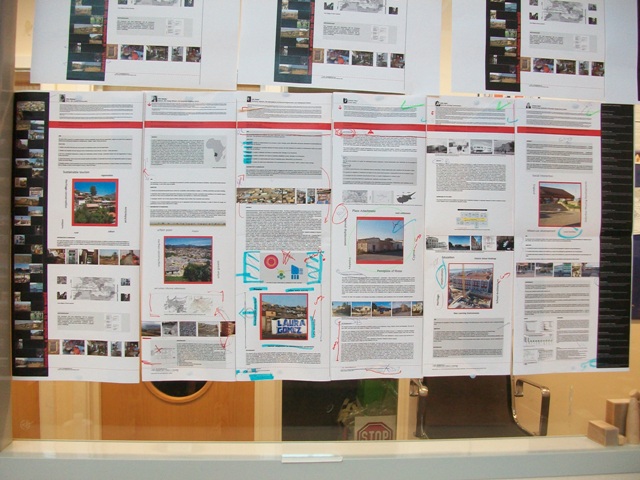
A few of us thus got together to design and build a panel to display some of the work currently being developed by the research students. Although we did not have any fancy 3d images of building projects, the intention was to somehow convey the idea that research is not necessarily boring, as many tend to think, and can actually be quite exciting. The general feedback was quite positive, so hopefully we were successful...
The authors and respective titles of the work displayed in our area were the following:
  • Aliye Mentesh - Sustainable tourism-led rural regeneration as a tool for conserving cultural heritage and architectural traditions: the case of Cyprus in its regional context
  • Célia Macedo - The use of earthen construction for sustainable dwellings in Angola
  • Julia Wedel - The impact of power differentials on adaptive opportunities in the context of water scarcity in an informal settlement in Lima, Peru
  • Makbule Oktay - Place Attachment and Perception of Home in Rural Settlements of northern Cyprus: Adaptation after Internal Displacement
  • Sofia Aleixo - Historic School buildings Conservation: impact of adaptation to new Education needs in the heritage value
  • Susanne Dahm - The role of local facilities in fostering social interaction in suburban housing developments in England 
There are many other students, carrying out interesting research, whose work was not represented at the exhibition. In case you are interested to know a bit more about their work click HERE.
The exhibition was open from the 7th until 17th June in Oxford and is now moving to London - details HERE.

Overall, adding to the positive experience, it was good to focus our attention on something that does not involve reading or writing for a change. I am already looking forward to the exhibition next year, which, if all goes well, will also be the final year of my PhD!

If you would like to look at a sample of the work developed here at Oxford Brookes in the School of the Built Environment just download the Yearbook 2011 available from Brookes website.

02/12/2009

Research Journal

A partir de agora esta página será complementada com uma outra onde se escreve somente sobre o decorrer da pesquisa que estou a levar a cabo como parte do programa de doutoramento.
A língua dominante deste novo blog, intitulado Research Journal, será o inglês e a periodicidade da actualização do conteúdo dependerá obviamente do andamento da investigação propriamente dita.

Visitas, comentários e feedback são sempre bem-vindos.

15/10/2009

So far so good...

Nas últimas semanas o tempo tem sido curto para tantas tarefas… O início desta nova fase da minha vida obriga-me de certa forma a dominar a mestria do esticar das horas. Devo dizer, no entanto, que sem muito sucesso.
Decidida a temática de investigação à qual vou dedicar os meus próximos 3 a 4 anos é necessário passar pela fase inicial da literature review, onde basicamente identificarei e analisarei o máximo de informação disponível (possível) relevante para o meu tema de investigação (earth as a low impact building material in urban areas of developing countries).

De certa forma posso dizer que já quando estava a fazer o mesmo para a tese do MSc fiquei muito surpreendida com a quantidade de pessoas espalhadas pelo mundo inteiro que se dedicam à investigação do material terra nas suas mais diversas facetas. Mesmo assim, agora que o período a dedicar para a leitura de publicações é mais extenso é que começo a ver a verdadeira dimensão da comunidade de académicos e profissionais ligados à terra.
A meu ver, já não faz qualquer sentido afirmar que pouco se sabe ou faz neste campo. Provavelmente existe sim é uma falta de divulgação dos outcomes ou de trabalho a ser desenvolvido, o que não quer dizer que ele não seja já uma realidade.
Entre os artigos interessantes que me têm passado pelas mãos nas passadas semanas encontram-se por exemplo:

- Thermal behaviour of adobe constructions de M.Luisa Parra-Saldivar e William Batty;
- Attitudes towards construction in the developing world: a case study from Zambia de B. Baice, M. Osmani, K. Hadjri e C. Chifunda
- Mass Housing through earth construction in Nigeria de Kadiri Kabir O.
- Environmental assessment of rammed earth construction systems de Graham Treloar, Geridwen Owen e Roger Fay
- Recourse to earth for low-cost housing in Nigeria de A. O. Olotuah

Existem também muitas teses de PhD que se debruçaram sobre as temáticas da construção em terra, algumas das quais se encontram disponíveis em formato digital através do website da British Library.
Deixo também uns exemplos em baixo:

- The architectural transformation of housing patterns in the city of Sana'a, Yemen de Al-Sabahi, Hatim Mohammed.
- The thermal performance of vernacular and contemporary houses in Sana'a, Yemen de Ayssa, Abdullah Zeid.
- Twentieth-century earthen buildings of Sardiania : archaeometry and conservation de Enrico F.

Obviamente que aliado a isto se encontra ainda todo o trabalho de carácter mais prático que foi ou se encontra a ser desenvolvido, mas isso seria assunto para outro post.

Espero voltar com updates nos próximos dias.

06/09/2009

O próximo passo...

Já lá vão dois anos desde que comecei a estudar "Energy Efficient and Sustainable Building" no Reino Unido. Dentro de apenas duas ou três semanas há-de chegar ao fim esta fase que me levou a conhecer uma imensidão de novos conceitos e me ensinou a olhar a arquitectura de uma forma bastante diferente, mais completa, diria. Foi também durante este período que desenvolvi um especial interesse pela arquitectura de terra, o que me permitiu olhar a mesma segundo as temáticas abordadas durante o MSc - Climatic Design, Building Physics, Post-Occupancy Evaluation, Sustainable Design in Context, entre outras.

Ainda durante este período tive a fantástica oportunidade de trabalhar num gabinete de arquitectura aqui em Oxford onde, para além de aprender muito sobre o processo da concepção de projecto desde a sua fase inicial até ao acompanhamento da obra, pude comparar e compreender as diferenças e semelhanças (muito poucas...) entre a arquitectura portuguesa e a inglesa.

A passagem por conferências como a Mediterra2009, o contacto com profissionais ligados à construção em terra e a presença em workshops deram-me a conhecer diferentes formas de olhar e trabalhar a terra nos dias que correm.

Diria que, em suma, foram dois com saldo bastante positivo. Bom, e agora... Embora há uns meses tenha considerado voltar a Portugal após a finalização do MSc, as perspectivas alteraram-se. A sede de conhecimento acabou por definir a continuação do meu percurso ligado não só à vida académica e investigação mas também à construção em terra. No final deste mês iniciarei um programa de doutoramento, aqui em Oxford, que procurará abordar o papel do material terra na contemporaneidade de países em desenvolvimento que possuem gravado nas suas tradições construtivas a existência deste material.

Muito caminho há ainda para trilhar, sobretudo no que diz respeito à aplicação prática da arquitectura de terra, no entanto, diria que a vontade para o fazer vai de alguma forma trazer tranquilidade aos próximos 3 a 4 anos. Depois disso... Logo se verá!
Como de resto é já habitual, utilizarei este blog para partilhar este meu percurso de descoberta e aprendizagem. Espero contar com a vossa visita!
Obrigada.