27/09/2011

Why is Luanda the most expensive city in the world?


This label has been used as an excuse to raise prices of everything from a can of beans in the corner shop of Chicala to a night in a luxury hotel in the city centre.
Other cities in this list of 10 include Tokyo, Osaka and Hong Kong. Cities well known for their organisation and efficient provision of infrastructure. Luanda, although heading the list, reveals various needs at different levels. One could of course argue that the construction of infrastructure is still in its infancy but progressing well, and that the asymmetries felt in Angola's society will eventually disappear in the coming years, which would result in decent living conditions for those who want to live and /or work in Luanda. For now, however, the daily struggles just to get by in this African capital is a reality hard to ignore.

Yesterday I spoke with Director General of Development Workshop, an NGO that has been working in Angola, particularly amongst the poorest population, for many years. As a result of their work over here, they have developed a very comprehensive view of the problems experienced in the country. Allan Cain drew my attention to recent studies which indicate that a huge percentage of the built environment in Luanda (particularly in peri-urban areas) lacks the minimum conditions of habitability. Considering that about 2 / 3 of Luanda's population lives in the suburban neighbourhoods, I wonder what the future has reserved for Luanda's urban informal areas? The total area occupied by informal settlements is much more extensive than the formal city and the same happens with the number of people inhabiting there. Current proposals for urban requalification appear to orient themselves towards partial or total removal (demolition) of existing buildings, rather than improving current conditions. The former usually has a greater focus on the space itself - the urban fabric is completely renovated, and people are relocated elsewhere (with all the associated social consequences), while the latter typically tends to also incorporate the human variable in the equation - the space is improved / upgraded, without recourse to mass demolitions, avoiding the usual stress associated with displacing people.

It is obviously very difficult to indicate which is the best or worst solution for Angola generally and Luanda in particular. The specific case of Angola, which has only recently found peace after a war of more than 30 years – still very much present in everyone's mind -, makes prescribing solutions for urban requalification even more complex. The risk of failure in the face of overwhelming problems is definitely an issue.
Experience tells us that each case is unique and different contexts will always require different and very context-specific solutions. However, one can always observe what has been done worldwide to overcome similar problems and learn from either previous success of failure... Following this, it is also vital to learn from strategies implemented within the country and learn with every step, so that mistakes are not repeated.

Despite all of this, and possibly because of very rapid economic growth in Angola, when travelling to Luanda one will find a city where buying or renting a house necessarily involves spending a small fortune. Where essential products are much more expensive than in other countries. Where one will pay more to buy 1lt of mineral water than to buy the same amount of gasoline and where everything is accounted in dollars. Luanda is becoming a modern city. Hundreds of cranes are now part of the city's silhouette, announcing the birth of the same number of skyscrapers. At the same time, garbage piles up on the streets of the musseques, water does not reach people's houses and at times the roads are almost impassible.
This is Luanda. Luanda is beautiful. Luanda is very rich, so rich that everyone wants to stay here. Luanda is poor, so poor that everyone wants to leave.

Luanda tem disto. Um rótulo que tem servido com pretexto para elevar preços de tudo, desde uma lata de feijão numa cantina da Chicala a uma noite no hotel de luxo no centro da cidade.
Outras cidades nesta lista das 10 magníficas incluem Tóquio, Osaka ou Hong Kong, cidades sobejamente conhecidas pela sua organização e eficiente funcionamento das suas infraestruturas. Luanda, embora encabece a lista, transpira carências aos mais diversos níveis. Pode obviamente argumentar-se que a construção de infraestruturas se encontra numa fase embrionária mas a avançar a bom ritmo e que nos próximos anos as assimetrias da sociedade acabarão por se esfumar, oferecendo assim condições de vida condignas para quem deseja habitar e/ou trabalhar em Luanda.
Por enquanto, todavia, a necessidade de travar lutas diárias para viver o dia-a-dia nesta capital africana é uma realidade difícil de ignorar.

Ontem falava com o Diretor Geral da Development Workshop, uma ONG que há já largos anos se tem dedicado a desenvolver trabalho em Angola junto de populações mais carenciadas. Como resultado do seu trabalho por cá, desenvolveram uma visão bastante abrangente das problemáticas vividas em Angola. Allan Cain chamou-me a atenção para estudos recentemente realizados que indicam que uma percentagem enorme do parque edificado em Luanda, sobretudo nas zonas peri-urbanas, não apresenta as condições mínimas de habitabilidade. Ora, considerando que cerca de 2/3 da população de Luanda reside nestes bairros suburbanos, pergunto qual será o futuro deste tecido urbano informal, que em área é muito mais extenso que a cidade formal, assim como das populações que aqui residem. Propostas atuais de requalificação urbana parecem orientar-se no sentido de eliminação parcial ou total (demolição) do edificado existente, ao invés de melhoramento das condições atuais. Sendo que o o primeiro normalmente tem um maior enfoque no espaço em si – o tecido urbano é completamente renovado, e as populações são realojadas noutro local (com todas as consequências sociais associadas), enquanto que o segundo por norma tende a incorporar também a variável humana na equação – o espaço é melhorado/requalificado, sem recurso a demolições em massa, e o stress da deslocação da população é evitado.
É obviamente muito difícil afirmar com certeza qual é a melhor ou pior solução. O caso particular de Angola, que só recentemente encontrou paz após uma guerra de mais de 30 anos, torna a prescrição de soluções de requalificação urbana ainda mais complexa. Certo que cada caso é um caso e diferentes contextos obrigam a que se adotem diferentes soluções, no entanto, talvez seja acertado observar o que se tem feito mundo fora, perceber porque alguns casos tiveram franco sucesso e porque outros falharam redondamente... Portanto, antes de mais aprender com os outros, e depois, à medida que se implementam estratégias já no país, aprender a cada passo dado, para que não se repitam erros cometidos.

Independentemente de tudo isto, possivelmente porque o rápido crescimento económico em Angola assim o permite, quando se viaja para Luanda encontra-se uma cidade onde comprar ou alugar uma casa obriga a que se possua uma pequena fortuna. Onde os produtos essenciais, e não só, são bem mais caros que noutros países. Onde ao comprar 1lt de água mineral se gasta mais que a comprar a mesma quantidade de gasolina e onde tudo se conta em dólares. Luanda é uma cidade a modernizar-se. Centenas de gruas desenham hoje a silhueta da cidade, anunciando o nascimento do mesmo número de arranha-céus. Ao mesmo tempo, acumulam-se pilhas de lixo pelos bairros, onde se vive um dia-a-dia sem água canalizada e onde se chega a casa por estradas quase intransitáveis. Luanda tem disto. Luanda é muito rica, tão rica que todos cá querem ficar. Luanda é pobre, tão pobre que todos querem sair.
Luanda tem disto. Um rótulo que tem servido com pretexto para elevar preços de tudo, desde uma lata de feijão numa cantina da Chicala a uma noite no hotel de luxo no centro da cidade.
Outras cidades nesta lista das 10 magníficas incluem Tóquio, Osaka ou Hong Kong, cidades sobejamente conhecidas pela sua organização e eficiente funcionamento das suas infraestruturas. Luanda, embora encabece a lista, transpira carências aos mais diversos níveis. Pode obviamente argumentar-se que a construção de infraestruturas se encontra numa fase embrionária mas a avançar a bom ritmo e que nos próximos anos as assimetrias da sociedade acabarão por se esfumar, oferecendo assim condições de vida condignas para quem deseja habitar e/ou trabalhar em Luanda.
Por enquanto, todavia, a necessidade de travar lutas diárias para viver o dia-a-dia nesta capital africana é uma realidade difícil de ignorar.

Ontem falava com o Diretor Geral da Development Workshop, uma ONG que há já largos anos se tem dedicado a desenvolver trabalho em Angola junto de populações mais carenciadas. Como resultado do seu trabalho por cá, desenvolveram uma visão bastante abrangente das problemáticas vividas em Angola. Allan Cain chamou-me a atenção para estudos recentemente realizados que indicam que uma percentagem enorme do parque edificado em Luanda, sobretudo nas zonas peri-urbanas, não apresenta as condições mínimas de habitabilidade. Ora, considerando que cerca de 2/3 da população de Luanda reside nestes bairros suburbanos, pergunto qual será o futuro deste tecido urbano informal, que em área é muito mais extenso que a cidade formal, assim como das populações que aqui residem. Propostas atuais de requalificação urbana parecem orientar-se no sentido de eliminação parcial ou total (demolição) do edificado existente, ao invés de melhoramento das condições atuais. Sendo que o o primeiro normalmente tem um maior enfoque no espaço em si – o tecido urbano é completamente renovado, e as populações são realojadas noutro local (com todas as consequências sociais associadas), enquanto que o segundo por norma tende a incorporar também a variável humana na equação – o espaço é melhorado/requalificado, sem recurso a demolições em massa, e o stress da deslocação da população é evitado.
É obviamente muito difícil afirmar com certeza qual é a melhor ou pior solução. O caso particular de Angola, que só recentemente encontrou paz após uma guerra de mais de 30 anos, torna a prescrição de soluções de requalificação urbana ainda mais complexa. Certo que cada caso é um caso e diferentes contextos obrigam a que se adotem diferentes soluções, no entanto, talvez seja acertado observar o que se tem feito mundo fora, perceber porque alguns casos tiveram franco sucesso e porque outros falharam redondamente... Portanto, antes de mais aprender com os outros, e depois, à medida que se implementam estratégias já no país, aprender a cada passo dado, para que não se repitam erros cometidos.

Independentemente de tudo isto, possivelmente porque o rápido crescimento económico em Angola assim o permite, quando se viaja para Luanda encontra-se uma cidade onde comprar ou alugar uma casa obriga a que se possua uma pequena fortuna. Onde os produtos essenciais, e não só, são bem mais caros que noutros países. Onde ao comprar 1lt de água mineral se gasta mais que a comprar a mesma quantidade de gasolina e onde tudo se conta em dólares. Luanda é uma cidade a modernizar-se. Centenas de gruas desenham hoje a silhueta da cidade, anunciando o nascimento do mesmo número de arranha-céus. Ao mesmo tempo, acumulam-se pilhas de lixo pelos bairros, onde se vive um dia-a-dia sem água canalizada e onde se chega a casa por estradas quase intransitáveis. 


Luanda tem disto. Luanda é linda. Luanda é muito rica, tão rica que todos cá querem ficar. Luanda é pobre, tão pobre que todos querem sair.

View of the new part of the city

26/09/2011

Home sweet home

 View from the street
Vista da rua

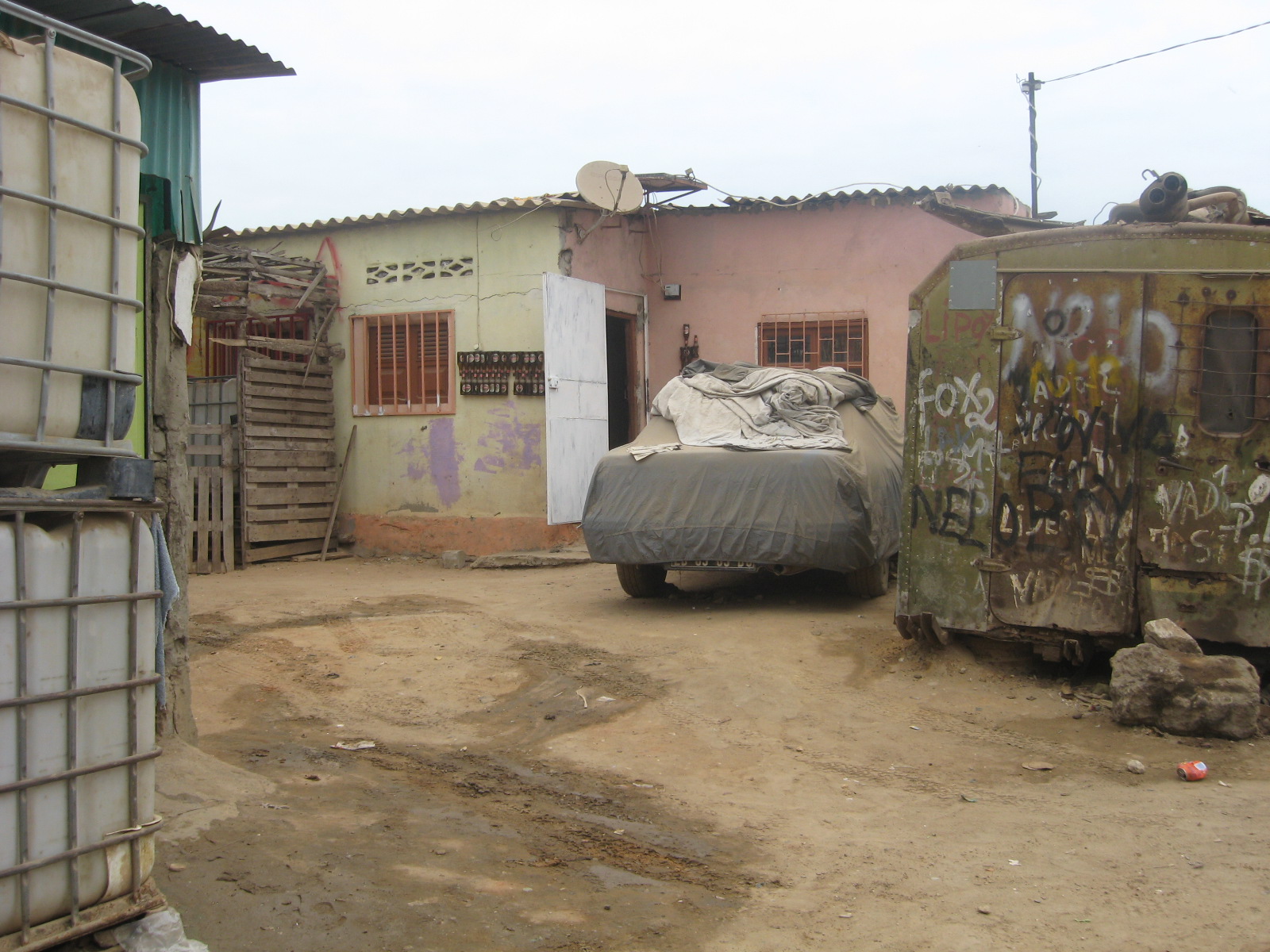
 My house in Chicala, Angola. Next there is an abandoned military vehicle.
A minha casa na Chicala, Angola. Ao lado encontra-se um veículo militar abandonado.


 Kitchen/dinning area
Zona de cozinha

and the view from the back of the house...
e a vista por trás da casa...

Our house mates - We found out yesterday that there were two kittens hiding behind the tv :) Their mother comes every once in a while to feed them.
Os nossos companheiros de casa - descobrimos ontem que estavam dois gatinhos escondidos atrás da televisão :) A mãe vem de vez em quando alimentá-los

"This is Africa"

I have been hearing this sentence since I first set foot in Angola, whenever something out of the ordinary happens. There is a concert taking place literally next to my house, since at least 9pm (it's now 1.15 am). Don't think it will stop any time soon. :) Oh well... At least it's nice African music!
My 'landlord' is telling me "This is Africa my friend, you will remember this when you're gone". I am sure I will... This and much more...

25/09/2011

In and around Luanda II


I can hear music coming from outside. In fact, there's always music in almost every corner of this neighbourhood, regardless of the time.5 am, 10 pm, it really doesn't seem to matter.
This spirit is contagious! We were told that the Angolan people faithfully follows the goal of constantly celebrating life, and that everything is an excuse to dance and partying, despite the adversities they face. These words left me with a smile on my face and reflecting on the lessons that some people in Northern Europe could take from this ...

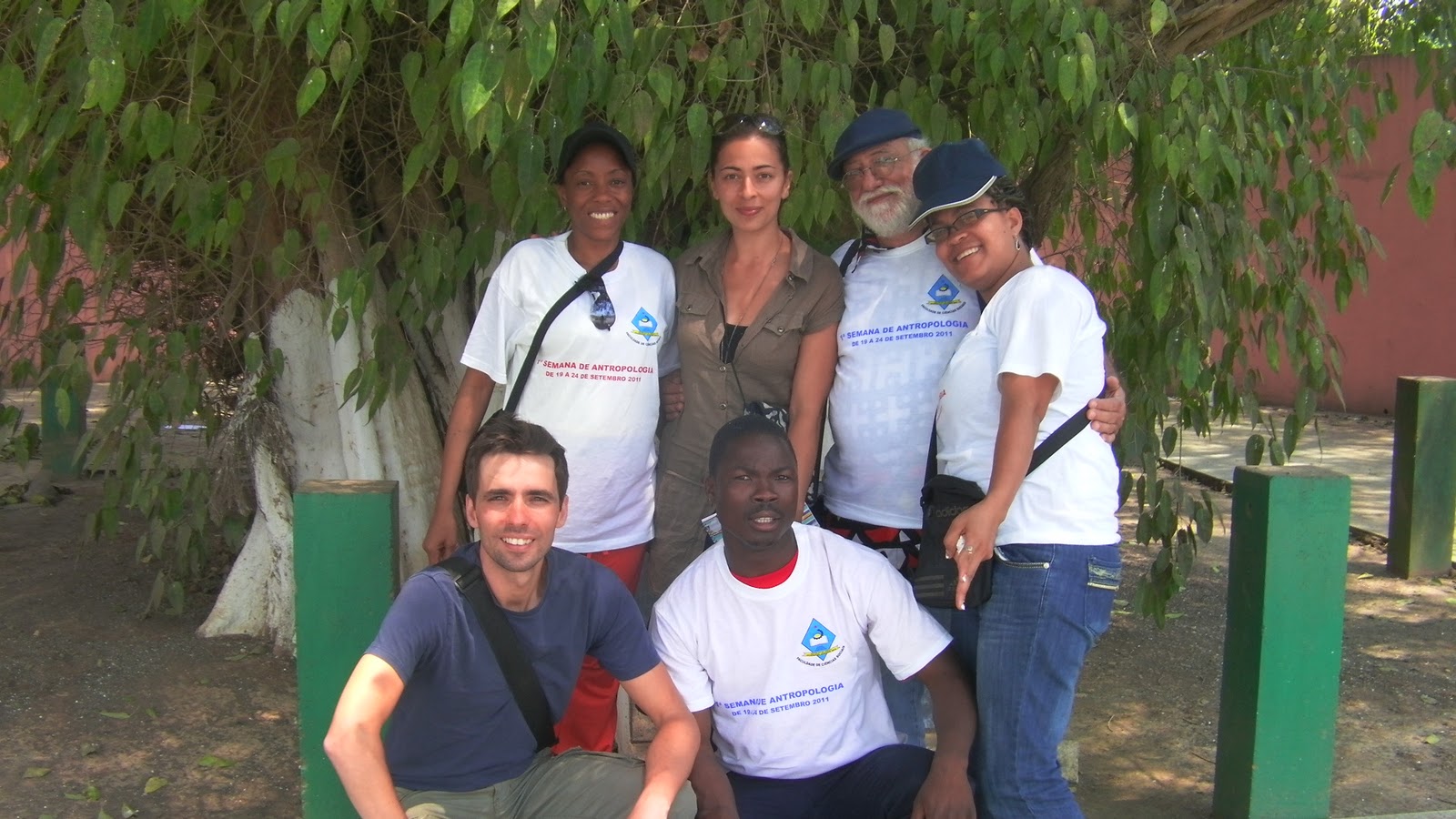
Yesterday, Dr. Samuel Aço, a professor of anthropology at the University Agostinho Neto, gave us a tour of some areas of Luanda. In the morning we joined a field trip organised by the university as part of the conference Week of Anthropology. The morning session's main theme was to do with the Mulemba tree and its role in the historical identity of Angola. The Mulemba we visited is located just outside Luanda and , according to Professor Virgílio Coelho – who gave a lecture in the morning -, this is a a very ancient tree whose meaning is deeply associated with fertility, power, wisdom, the bridge between the world of men and their ancestors, amongst others. Today, the location of this tree became almost a point and destination of pilgrimage, searched by those wishing to ask for the protection of their ancestors or simply those seeking good fortune in their lives.
After a long photo session and a lunch that appeared spontaneously fromone of the student's car, the class ended and the students headed back home. Our day, however, was still far from over. We went to visit the outskirts of the monumental city that is Luanda. A mixture of huge areas of informal settlements and planned residential buildings of several floors (many still empty) form the landscape of peri-urban Luanda, although the former clearly represents the vast majority. It is hard to miss the monochromatic grey tones of the cement blocks and metal roofs, only occasionally interrupted by the odd façade painted in vivid colours - often mentioning the business done there. Even the red earth, which is in the origin of the term musseques, is disappearing under the dense fabric of Luanda's musseques.
Dr. SA explained how the war, which ran for more than 30 years, played a major role or even decisive in the evolution of the construction of housing and the way space was generally lived and understood in Angolan cities, but particularly in Luanda. What we saw yesterday illustrates exactly this idea. The rural-urban mass migrations that characterized the years of conflict in Angola created the rapid need for shelter. This inevitably dictated the beginning of the phenomenon of peri-urbanisation, today so overwhelmingly spread that one loses completely the notion of beginning, middle and end.

These buildings also bear witness to the the way people have been building since the first generations first settled in the musseques. The wattle-and-daub and adobe construction techniques - technologies derived from rural areas - still survive, but only in the oldest structures, while the most modern display cement blocks and metal sheet roofs. According to S.A., the technology of building with earth is now as good as lost and, although one can easily make adobe if one wishes, the skill of building good quality houses using adobe or mud-and-daub no longer exists. The vernacular is now very much associated with poverty and, if this trend persists, I would say that the very concept of Angolan traditional and/or vernacular architecture will have to be re-assessed ...

(It is very hot ... The music continues to play outside, now accompanied by the sound of a shovel mixing a cement mortar).

We drove some 40 kms away from the centre of Luanda, passed Cacuaco and stooped close to the Katari (not sure how to spell it) lake to contemplate the beauty of nature. There was no trace of the confusion of the city. The only sound we could hear was the wind whistling passing quickly through the grass and the fading whistles of the fisherman down at the lake, as if to say that they had not had any luck with catching cachuço. We met N., a man of a strong handshake who, with his two dogs, manages a piece of land with 13 hectares. "There is no food to feed the pigs" he said, "We are waiting for the rain to make things grow again.".

The sunset on the horizon was telling us that it was time to return. On our way back we took another route and passed through different neighbourhoods. The highway back to Luanda still smells like new! Everything is changing in the city, so it seems. The dozens of trucks driven by Chinese and overloaded with building materials we saw passing by, are obviously a sign of the current reality in Angola. The rapid development coexists literally side by side with the exponential growth of these musseques. They seem to have a life of their own and shape themselves forming an organic and dense urban fabric. And if the access to the city is a prime location to observe the meeting of these realities, the opposite also occasionally happens... One only has to look at the huge concrete walls along the motorway - wide enough to hide, or simply make people forget the existence of slums. What is that saying "out of sight ..."?

There is so much more to write, but for now I'll stop here. Let's wait and see what tomorrow brings.

Oiço música vinda lá de fora. Na verdade, parece sempre haver música em qualquer recanto aqui no bairro da Chicala, seja às 5 da manhã, seja às 10 da noite. Este espírito é contagiante! Ontem diziam-nos que o povo Angolano vive segundo este princípio de ser solidário, aberto, feliz, sempre a dançar e celebrar a vida. Isto tudo independentemente das adversidades que se lhes aparecem pelo caminho da vida. Estas palavras deixaram-me com um sorriso nos lábios e a refletir sobre as lições que se podiam passar para alguns povos do norte da Europa...

Ontem corremos Luanda e arredores na companhia do Doutor Samuel Aço, professor de antropologia na Universidade Agostinho Neto, e de um dos seus antigos alunos Isaías, hoje multifacetado nas artes da representação de teatro, cinema e televisão – e futuro antropólogo forense!. Juntámo-nos de manhã a uma visita de estudo organizada no âmbito da Semana da Antropologia, que teve teve como tema principal a Mulemba e o seu papel na identidade histórica de Angola. A Mulemba que visitámos fica localizada à saída de Luanda e, segundo o que nos foi transmitido pelo professor Virgílio Coelho, trata-se de uma uma árvore centenária que abarca desde há largos anos anos uma simbologia ligada à fertilidade, poder, sabedoria, a ponte entre o mundo dos homens e os seus antepassados, entre outros. O local onde se encontra hoje esta árvore, já de tronco e copa sobejamente majestosos, tornou-se quase um ponto de peregrinação e destino obrigatório de quem deseja fazer pedidos aos seus antepassados ou simplesmente trazer boas fortunas para as suas vidas.

Após uma longa sessão de fotografias e um almoço que apareceu espontaneamente da mala do carro de um dos alunos, a aula terminou e os alunos rumaram a casa. O nosso dia, no entanto, estava ainda longe de terminar. Daí seguimos para a visita aos subúrbios da monumental cidade que é Luanda. Uma mistura de assentamentos informais com espaços planeados que contemplam edifícios de habitação de vários pisos (muitos ainda por habitar) compõem a paisagem peri-urbana de Luanda, embora sejam os primeiros claramente a grande maioria. Ressaltam à vista os tons monocromáticos do tijolo de cimento e telhados de chapa metálica, ocasionalmente interrompidos por uma ou outra fachada pintada a cor viva ou com anúncios de um negócio que se faz por ali. Até já a terra avermelhada, que deu o origem ao termo musseque que hoje se conhece, se vai escondendo por entre a malha densa dos musseques de Luanda. O Dr. S.A. explicava-me como a guerra, que se desenrolou por mais de 30 anos, desempenhou um papel preponderante ou mesmo decisivo na evolução da construção e vivência da habitação nas cidades Angolanas, mas sobretudo em Luanda. O que vimos pelos bairros ontem ilustra exatamente essa ideia. Os movimentos migratórios que caracterizaram os anos de conflito em Angola, trouxeram muita gente para Luanda, de tal forma que a necessidade de criação de abrigo ditou inevitavelmente o início do fenómeno dos bairros peri-urbanos, espalhados por uma extensão de perder de vista no horizonte... Uma escala perfeitamente esmagadora e impressionante, onde se perde por completo a noção de princípio, meio e fim.

As construções contam também a história dos saberes das várias gerações que se foram instalando e por ali ficando. O pau-a-pique e adobe, tecnologias oriundas das realidades rurais, sobrevive ainda nas estruturas mais antigas, enquanto as mais modernas ostentam já o bendito tijolo de cimento e a chapa de zinco. Dizia-me o Dr. que as tecnologias de construção com terra se perderam, e que embora se possa facilmente fazer adobe se se desejar, já não se sabe construir com qualidade usando adobe ou pau-a-pique. O vernacular está então agora associado a pobreza e, muito provavelmente, se esta tendência perdurar, o próprio conceito de arquitetura vernacular ou tradicional de Angola terá de ser repensado...

(Está muito calor...A música continua a tocar lá fora, agora acompanhada pelo som do roçar de uma pá na feitura de uma mistura de argamassa de cimento).

Afastámo-nos uns 40 kms do centro de Luanda, passámos o Cacuaco e parámos junto à lagoa Katari (será escrito assim?) para contemplar a beleza da natureza. Deixámos para trás a confusão da cidade. Ouve-se somente o assobiar do vento que passa rapidamente por entre o capim e os assobios do pescador lá bem em baixo na lagoa a avisar que não apanhou cachuço. Conhecemos o N., um homem de aperto de mão forte, que, com os seus dois cães, toma conta de um pedaço de terra com 13 hectares. “Os porcos não têm comida” dizia, “Estamos à espera das chuvas para que as coisas voltem a crescer”.

O pôr-do-sol anunciava-se já no horizonte e era hora de voltar. Tomámos outro caminho para passar por bairros diferentes. A auto-estrada de volta a Luanda cheira ainda a nova! Tudo está a mudar na cidade, assim parece. As dezenas de camiões conduzidos por chineses e carregadíssimos de materiais de construção que por nós passaram, são obviamente um sinal dos tempos que se vivem por aqui, assim como da construção desenfreada, ainda que aparentemente desequilibrada em diversas frentes. A realidade do rápido desenvolvimento coexiste literalmente lado a lado com o crescimento dos bairros que de desenham a si próprios formando uma densa e labiríntica malha urbana. E, se às vezes os acessos à cidade são locais privilegiados para contemplar o encontro destas realidades, os mesmos são também usados para o oposto, ora não fossem os muros de betão ao longo da auto-estrada suficientemente altos para esconder, ou simplesmente fazer esquecer, a existência dos musseques. Já diz o outro, “longe da vista...”

Teria muito mais para escrever, mas fico-me para já por aqui. Hoje é um dia para descansar. Amanhã volto ao trabalho!

24/09/2011

In and around Luanda


In Luanda!


The arrival in Luanda was not the easiest... Starting with the landing, which was probably the scariest of my life so far – hope next time the captain remembers that it is actually good practice not to start landing when there is a plane occupying the runway! Getting our luggage back was also a bit of a nightmare. Apparently someone decided that the collective weight of the luggage in our flight was just a little bit too heavy to accompany the passengers. What better solution then to just leave it behind in South Africa?? Of course no one would miss their things for a day or two, right?? “This is Africa” I was told I don't know how many times, as if to justify this attitude.
Well, we eventually returned to the airport today – not without experiencing what is like to see your car dying in Luanda's chaotic traffic – and managed to pick up our bags from literally a pile of bags, which had been left for whoever wanted to get their hands on them...

Apart from that, so far everything went quite well. We are all settled in the house. The neighbourhood Chicala – where the house is located – illustrates very well some of the most pressing issues affecting Luanda these days: a growing informal settlement literally next to some of the most impressive modern buildings of the capital, complete lack of infrastructures (no water, roads, etc), absence of a strategy for storage or collection of waste, poor quality of the built environment (mostly self-built), and so on, and so on...
Despite all of that, it enclosures something inexplicably beautiful and special... J.M., the owner of the house where I am staying, confessed today that he would not change his humble house for one of those new apartments being built as part of the National Housing Programme. “I have lived here for a very long time and have my life here. If I am taken to a completely different place, how will I earn my living?” he told me. J.M. added that, in fact, the eviction and relocation of people has been common practice over the last years in Luanda, and that is often leading to very complicated situations. As he said to provide an example “the government may demolish a fisherman neighbourhood and take all its inhabitants to a place far from the sea, or demolish a farmers neighbourhood and take them somewhere close to the sea”.
N., an artist with a passion for African sculpture said just earlier today that he knows that sooner or later, Chicala will also join the names of other neighbourhoods that ceased to exist. “When?” I asked. “Only God knows...There is nothing we can do to stop it”...

Today was quite a busy and full day. I'm not sure how or why, but tonight I ended up at someone's birthday party. Interesting experience, great food, non-stop very loud Angolan music and very energetic moves (seriously, everyone seems to be a professional dancer!!) :)
Probably the whole neighbourhood was there - children, parents, brothers, sisters, cousins, friends... I am pretty sure that by tomorrow every single person in the neighbourhood will know that I am spending some time as their neighbour. Hopefully that will help with the interviews for my research.

Tomorrow I am going on a sort of fieldtrip around Luanda with some students from the local university. Looking forward to it!
See you soon!

20/09/2011

More photos from Ghana

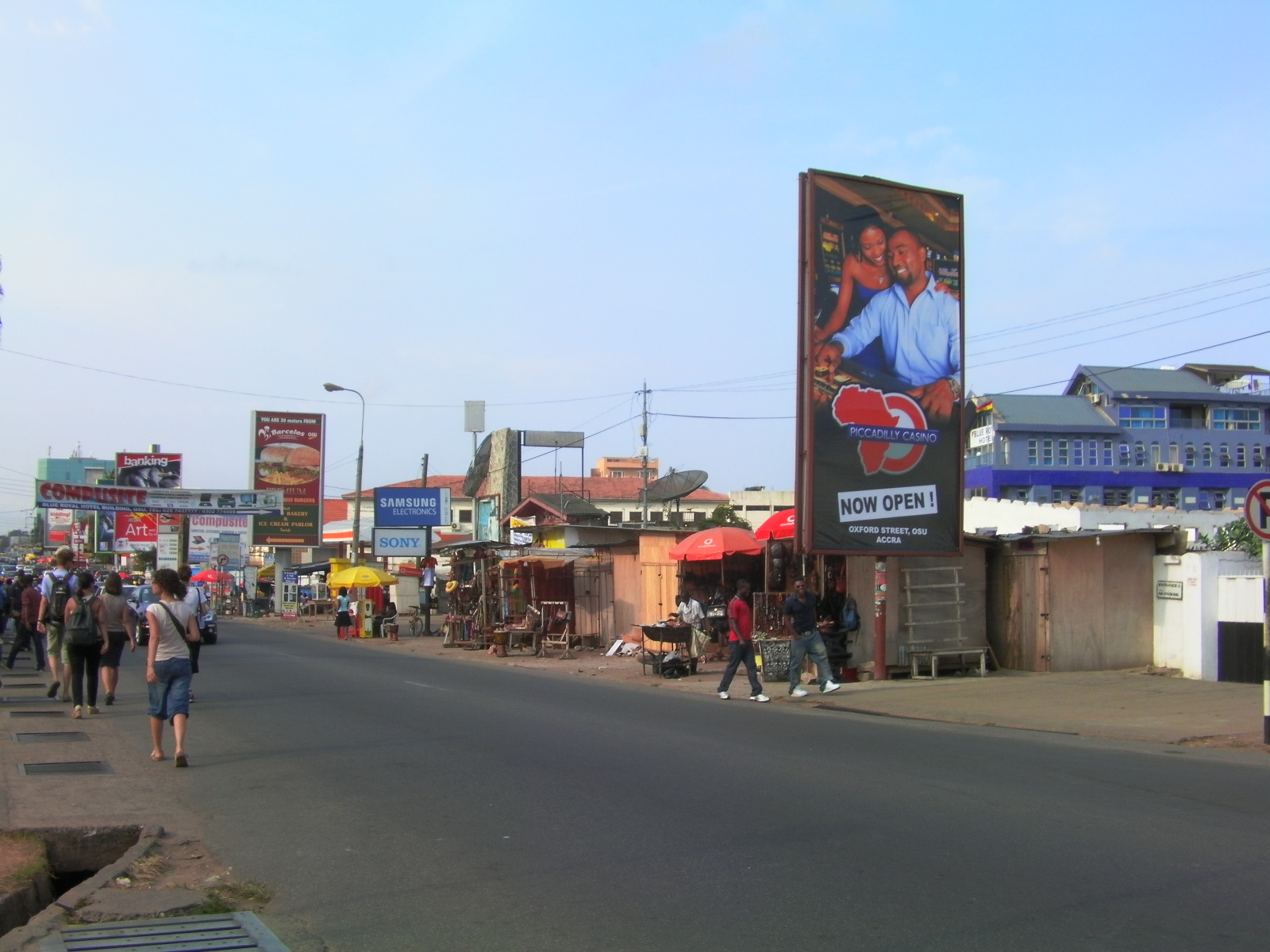
 Oxford street in Accra

The photos below are all from Darmang, the village close to the workshop site


From Ghana to Angola... Quick stop in Oxford

I am now nearly done with packing and getting ready to leave towards Angola. Still can't believe I have only just arrived from Ghana and am taking off again tomorrow... And I still feel so incredibly tired...

Unfortunately the blogging has not been as frequent as I initially anticipated, but hopefully in Angola things will be different - or not, who knows?...
For now, and because I am really lacking the time, I leave here a selection of photos I took in Ghana. To find out more about how the workshop went you can access the ASF-UK Local Vs Global blog.

See you soon!


03/09/2011

Hello from Pokuase, Ghana

 After a short stop in Lisbon...

...I arrived in Accra. The photos below are from Pokuase, where the workshop is taking place.


30/08/2011

The Small Change Forum: ingenious people make better places

One day conference hosted by community arts organisation, Multistory, and the Centre for Development and Emergency Practice (CENDEP), Oxford Brookes University

Friday 7 October 2011
Oxford Brookes University, Oxford


Creative cultural action, including participatory arts, as the catalyst for community development is the theme of this one day conference. To these ends it will explore how small, practical and mostly low budget creative interventions, if carefully targeted, can act as catalysts for big and long lasting change designed to improve people’s environments and opportunities. This simple but powerful ideal demands significant changes to the way we think, do and organise in order to sustain, which will be explored as both theory and practice at the conference.

The conference will be organised into keynote presentations, thematic presentations, afternoon break out discussion sessions, and final plenary discussions. Thematic presentations (case studies, papers and reflective pieces) will be organised into the following Small Change themes: doing, thinking and sustaining. These will be presented by practitioners from non governmental organisations (NGOs), creative arts and academic sectors.

Keynote presentations will be made by development practitioner, Nabeel Hamdi, and community arts consultant, François Matarasso. Thematic sessions will include presentations from Scott Burnham (independent consultant), Penny Evans (Knowle West Media Centre), Barbara Wood (Schumacher Foundation), Jamie Young (RSA), Julia Slay (New Economics Foundation), Mukul Dhawan (AzkoNobel: Let’s Colour Project), Liljana Alcheva (Habitat for Humanity, Macedonia), and Danielle Smith (NGO, Sandblast).

This event will launch The Small Change Forum, designed to promote small change learning and practice through its documentation and analysis of case files. Each event, as part of this initiative, will disseminate new ideas, tools, methods, practical wisdoms, principles in order to inform teaching and practice, and to create a policy environment conducive to change.


Registration and Costs
The conference fee is £30 / £20 concession. For registration please go to:


For further information please contact Jeni Burnell, Forum Chair, at: jburnell@brookes.ac.uk

European Network of Earth Building

Source: http://earthbuildingeurope.wordpress.com/

In the meeting on 6th May 2011 in Marseilles it was decided to launch a European Network of Earth Building.

In the first phase this will be an informal knowledge network, using electronic (email and website) methods to communicate. In the early stage of development membership of the email list is free.

This will use the existing national networks and organisations already identified through the Terra Incognita project.


Lors de la rencontre du 06 mai 2011 à Marseille, il a été décidé de lancer un réseau européen des acteurs de la construction en terre.

Dans un premier temps, soit les prochains mois ou pour sa première année d’existence, on parlera d’un réseau informel de connaissance, utilisant des moyens électroniques de communication (site internet et courriels).

Il s’organisera sur base des réseaux nationaux existants et des organisations déjà identifiées au travers du Projet Terra Incognita.

26/08/2011

Ready to go!

Now I am finally ready to take off towards Ghana and Angola. After having picked up the Angolan visa yesterday, there is really nothing left to worry about – except of course the usual little things, like hoping the plane trip goes free of problems and so on...


To those planning to travel to Angola in the future, know that it is not the sort of trip that you decide to go in one day and get on a plane the week afterwards... Believe it or not, it took me roughly one year to prepare the trip to Angola. OK, maybe it was a bit too much, but I did have a few problems along the way that forced me to postpone the trip by a few months. Nevertheless, the whole process involves taking various – as in MANY - vaccines, apply for a visa (which sometimes requires an invitation letter), sorting out accommodation (really difficult to get something if, like me, you have a low budget), booking plane tickets, etc. In my case this also involved planning the whole fieldwork - methodology, data collection techniques, etc. -, which in itself was quite a challenge...

For now, and since before going to Angola, I will attend the ASF-UK workshop in Ghana, the focus is on getting mentally prepared for this. The organisation has sent the participants a few interesting texts on the main subject of the workshop - African Architecture in the African City by D.V Tassel and The African House Today, by A.Folkers. They have already arrived in Ghana and are preparing everything for the participants’ arrival, as they explain in the Local Vs Global blog - http://localvsglobal.wordpress.com/. By the way, apparently they will be posting in this same blog throughout the workshop, so if you are interested to read about what we will be doing there, save this URL and check back regularly for updates. I am really excited about the workshop and looking forward to start!

As for Angola, I anticipate that the experience will be immensely rich at every level. I was asked today if I could go to the local university and talk to the students and lecturers while I am in Luanda carrying out my fieldwork. It should be interesting to get the students’ perspective and opinions on certain issues such as the urban growth and the quality of the built environment in the country. Look forward to it... I was wondering, as I my research looks specifically at earthen construction it might be interesting to prepare something about the use of this construction technology in the European context... Still have to think about that...

23/08/2011

Rural Studio - Why aren't all architecture schools like this?

Just a few days ago a friend and colleague architect told me about this wonderful thing called "the Rural Studio". It basically consists of a different and revolutionary way of teaching and doing architecture, in which students are made aware of the social responsabilities of the profession of the architect while providing homes to poor communities in Alabama.

The Rural Studio is part of Auburn University and was created in 1993 with the intention of teaching architecture by combining theory and practice and apply them to local real life situations, i.e., hands-on experience focused on improving living condition of people in an impoverished area of Alabama. The Rural Studio's concept is not complicated at all, in fact it is as simple as it can get: teach students about architecture and the built environment, from design to construction, and get them deeply involved in every step of the way. I wonder why this is not done more often?...

My friend E. also told me all about the huge success of this programme, which helps to explain the long waiting list of people from all over the world who wish to attend the course. I can easily relate to them... A few years ago, when I was studying architecture one of the things that I criticised was the lack of hands-on experience - and I am not just talking about learning how to design buildings but also how to actually construct them.


If you are interested you can read more about the Rural Studio HERE and HERE.

20/08/2011

UNESCO/ Reviving Earth Architecture in the Jordan Valley - Palestine

via: youtube
Short video produced by UNESCO Ramallah Office on the UN Trust Fund for Human Security (UNTF-HS) Fund Joint Program: “Livelihood Protection and Sustainable Empowerment of Vulnerable Rural and Refugee Communities in the Jordan Valley” in Aqabet Jaber Refugee Camp.


The Human Security Joint Programme for the Jordan Valley implemented by FAO, UNESCO, UNRWA and UN WOMEN is designed to respond to the protection and livelihood needs of selected vulnerable Palestinian communities and to improve their living conditions by providing them with the skills, tools and techniques to mitigate and cope with the threats they are confronted with.

UNESCO component focuses on improving the physical living conditions and housing standards in the Jordan Valley, where some 30 percent of its inhabitants, including refugees, Bedouins and economic migrants, are deprived of their right to adequate housing. In order to achieve its objectives, UNESCO component is designed to utilise existing and yet untapped opportunities by providing local population with up-to-date know-how and alternative building techniques, notably the "mud-brick", which in the past was extensively used in the area as the most suitable construction material for all typologies of buildings as well as the most environment friendly.

The selected direct beneficiaries (skilled workers and unskilled workers and 3 young architects) will be trained on-the-job on the production and construction of mud-brick utilising the 6 mud-brick structures to be provided by the Programme which shall also serve as pilot demonstration structures. These are: the UNRWA community centre in Aqbet Jabr refugee camp, 4 women centres in various villages in the JV to be utilised by UN Women and its local partners, the museum of Agriculture which is a joint initiative of the Palestinian ministries of Tourism and Antiquities, and Agriculture and the Palestinian Agricultural Relief Committees (PARC), in addition to the rehabilitation works in selected historical sites.

The first pilot demonstration structure, the UNRWA community centre is a 250 m2 structure that, for training and experimental purposes, will be constructed using different available materials (Adobe Blocks, Compressed Earth Blocks, etc) and building techniques (vaults, domes, flat ceilings, multi-floor, and different kinds of plastering). Over 30 skilled workers, 20 unskilled workers and 3 architects including 7 women are currently benefiting from the on-the-job training through the construction of this pilot under the direct supervision of the UNSCO Team of Consultants.

15/08/2011

A few months in Africa

With only two weeks to go before I embark on my trip to Ghana and Angola, I feel that I still have a million things to prepare before leaving! Not a very good feeling, I have to say...

The trip to Ghana was organised by ASF-UK as part of the workshop  "Local Vs Global – Sustainable Development Workshop".  Just a few days ago, the organisation has announced that we would also take part in the symposium "Local Vs Global: Strategies for Sustainability in the face of rapid development, UN-Habitat and Architecture sans Frontiers Day Symposium" while we're there. It sounds very exciting and I am looking forward to it.
As far as the trip to Angola is concerned, the preparation and organisation started about a year ago. It has been quite a challenge but, apart from minor things, I can now say that it's all been sorted. Along the way, I was fortunate to have had the help and support of wonderful people in Angola, to whom I will be eternally grateful. Hopefully the fieldwork will go well and I will be able to collect sufficient and relevant data for my research. Fingers crossed!!

13/08/2011

Interview with Ronald Rael - via MYOO

I came across this interview by Ronald Rael this morning and thought it would be interesting to share with all of you earth building enthusiasts. 

Ronald is the author of the well known website eartharchitecture.org and more recently of the book Earth Architecture. As he says in the interview below, he has been involved in earthen architecture since he was quite young and today is considered one of the most prominent references in the field.
For me personally, I think that he is doing a great job at promoting the contemporary use of earthen buildings, mostly through his book and blog. I also like the fact that he is realistic in what he says about earth buildings, i.e, he doesn't claim that this is the most sustainable material in the world and that it is THE solution for the problems with the world's built environment (as I am sure you heard many people saying). Instead, he suggests that it can be used as a sustainable building material in some contexts and it may even be unsustainable in some cases. 
I guess that, as in everything, when planning a building there needs to be a careful analysis before selecting the most appropriate construction materials and technology. This will of course depend on the context of such buildings (in which geographical, environmental, social, economic and cultural aspects will have to be considered).


Interview with Ronald Rael - via: MYOO

After our June interview with Pietro Laureano, we started thinking about how regular people might actually apply traditional technology to their daily lives. Especially, we wondered, would large numbers of people ever live in houses made of mud? That seems like a good test of how far we’re willing to carry old, sustainable ideas into a new, sustainable future. Would earth houses be safe? Would they actually be better for the environment? Would they “feel” more natural?
To help answer these questions, we turned to Ronald Rael, the author of Earth Architecture, a book and website devoted to championing buildings made of dirt. He spoke with us from the roof of his office in a West Oakland warehouse.

MYOO: How did you start working with houses built out of earth?

RONALD RAEL: Personally, I became involved with earth architecture because I grew up on a cattle ranch on the border of southern Colorado and New Mexico. So it was a material I was very familiar with from my childhood. And then I studied architecture at Columbia in New York and became curious about the architectural methods from my upbringing.

MYOO: What’s not sustainable about the modern concrete and steel buildings we typically see today?

RONALD: I wouldn’t say there’s anything “not sustainable” about any of those materials. I think what needs to be considered is how those materials are used, the planned longevity, what context they’re being used in and so on. I think it’s far more complex than classifying some material as sustainable or not sustainable.
For example, earth has its potential for being unsustainable as well. Culturally, it’s a material that people see as being backwards or not modern or very poor, and people want to advance and have a better lifestyle. When they don’t associate a material like earth with cultural advancement, economic advancement, education and so on then in a sense earth becomes non-sustainable because it doesn’t sustain a reflection of what a culture intends itself to be or has aspirations to be.

MYOO: So then how are these materials–concrete, glass and steel–being used?

RONALD: One thing is that they are often used acontextually. Because of all the integrated technologies and all the associated materials, today’s buildings do not necessarily need to respond to their context. That means, for example, that you might build an entire south facade out of glass. But then you’ll constantly be cooling down that whole building.
That’s one of my biggest issues: there’s no contextuality to buildings today. We find the same buildings along the highway in South Carolina as we do in upstate New York as we do in the deserts of Arizona. The same exact building. It doesn’t matter where the building is built.
And that’s something that’s changed over the last century or so. Before, buildings were very contextual. The materials may have come within a certain distance from the site, they were produced, they were manufactured within some certain radius. Now the steel may came from China, the concrete may be mined from another part of the country, you might get the stone from India. There’s definitely something awry about that.

MYOO: Why would we have ever stopped using local materials and techniques and started using generic ones that don’t suit the local environment?

RONALD: My answer is capitalism. Because traditional buildings methods and materials don’t make money. No one’s gotten rich off of earth and one of the reasons why is because it can’t be homogenized, it can’t be standardized, and it can’t be sold. If you’re buying a certain type of concrete, you know it has a certain strength. Same with a certain type of steel. There’s a sameness. But earth is very difficult to homogenize. If you dig a hole outside your front door and again across the street, the earth may be very different, even though it still has the capacity to make a building.

MYOO: So if earth is difficult to homogenize as a commodity, how do you get more architects and builders working with it?

RONALD: I think if municipalities begin to adopt building codes that reflect traditional building methods, that’s one way. In fact there are movements to recognize earth as a building material. It’s been introduced into the International Building Code recently.
One of the biggest problems is that insurance companies will not insure buildings constructed of earth because it’s not defined by codes. If you won’t insure a building made of earth, a bank won’t give you money to build a building made of earth, and you’re caught in this vicious cycle.
Education is something that would allow people to start living in earth buildings. There are increasingly schools that are teaching earthen architecture. The more that people get educated about sustainable and traditional building methods, the more they will go out in the work force and build this way. But I think a lot of the knowledge has been stripped out of the culture. And it’s very hard to supplant and reintroduce.

MYOO: Is all dirt good for building?

RONALD: Almost all earth, all dirt that you can find, is able to be used in some way for building. There are a number of what can be called building techniques that can be used with earth. So for example rammed earth is one technique. Mud brick, cob, adobe–these are all techniques that can allow different soil types to be used in different ways.
So in some cases if the soil has less of some material, something else can be introduced that is local. So if there was less clay, it’s straw. Or you could use ox blood or you could use cactus mucilage. There are different ways to strengthen the earth. The earth itself will have shells and clay and sand particles in it; if it lacks or has too much of any of one of these, there’s going to be something in the context that could supplant that.
And also you could dry the earth with the sun. In some places you could ram the earth or also compact it by hand. In other places you could puddle it. If there was lots of vegetation matter around, you could weave vegetation matter together and apply mud to that. Earth exits on every continent. Every country has their own methods and techniques. Many of these are alive and well. It’s still the most widely used material on the planet.

MYOO: Yeah, I read on your website that roughly 3 billion people live in earth houses. That’s almost half the planet’s population. I’m assuming you’re counting brick as earth…?

RONALD: No, I’m only talking about buildings that use earth that’s not been chemically altered. Brick is fired and that’s a chemical transformation that takes place under high heat that won’t allow it to ever return back to its original soil properties.

MYOO: Where are those 3 billion earth homes? They don’t seem too common in the U.S.

RONALD: Most of them are in China, India, in Africa, and in South America. But there’s an enormous amount here in the United States. There’s plenty in New York. They’re on the East Coast. The oldest house in Boston is made of mud brick, and that’s Paul Revere’s house.
The oldest [European] house in the Americas was Christopher Columbus’s house. That was made of rammed earth and its ruins still exist. The oldest continuously occupied building in America is a multilevel apartment building in New Mexico made in the 1100s, made of mud. They’re everywhere. If you’re really interested in finding them, you’ll find that they’re right under your nose.

MYOO: Are there some people who will never accept the idea of living in an earth house? Or what I imagine they’d want to call a “dirt” house?

RONALD: I think there’s a general homogeneity in American culture that won’t allow them to live in an earth house. There are preconceptions about what it is, that it’s some kind of hut for an impoverished person. I don’t know what would allow it to be introduced into popular culture.
But I do think that there’s a potential to raise these issues in countries in the Middle East and in China where they are building huge cities overnight. They’re using tremendous resources, usually to construct these all out of concrete block. There’s a lot of interest and a lot of potential to do things there because they recognize the potential of the material and they have a tradition with the material.
They haven’t yet seen–how should I say this?–they haven’t gone through the kind of scarification that suggests the material is bad. I think that capitalism presents something as being good or bad and the good thing you buy and the bad thing you don’t. And so when earth is pushed to the background, they said, “Well earth is bad, look at this new modern fresh thing.” I don’t think that’s happened in some of the emerging countries. They may not be very far removed from earth in terms of the generations. They may have in fact been displaced from an earthen village and urbanised, for example, in China, so they can still see how you can use the material.

MYOO: What can you not do with earth? How does your architectural approach have to change from what we expect of buildings made from metal and glass and concrete?

RONALD: You can’t get it wet.

MYOO: Huh. That seems like a pretty big thing!

RONALD: Yeah. That is a big thing so you have to have a nice roof, you have to have a nice foundation. There’s a kind of overused cliché in the earth building world that says “An earth house has to have a good hat and a good pair of shoes.” And really that’s all it needs. It sounds like a big thing but you’d be surprised at how well the roofs and foundations work.
At a fundamental level, all buildings are attempting not to get wet, they just do it in different ways. And so a wood building does that with a roof, lots of paint, maybe tar. People think brick’s waterproof even though it’s not. Concrete’s not waterproof. All building’s really can’t get wet.
One thing that I think is beautiful about earth is that when it’s wet, it tells you it’s wet. It changes its color. Most buildings today are designed in such a way that you don’t see their responses with the environment. If a wooden building is leaking, you might not never know for ten years until it’s completely rotted. It doesn’t talk back to you. It doesn’t say what’s going on.

- Adam Bright

11/08/2011

Next chapter - restoring our earthen house

 east elevation
 east and north elevations
 south and east elevations
view from the top of the hill

After one year of going back and forth and dealing with the usual bureaucracy we can finally can call this bit of land in Alentejo (Portugal) ours! The next step, which should take another year, is restoring the house and make the place liveable so that we can move back to Portugal for good!

The plan is to start the building process with a composting toilet and a shower outside, and then crack on full power with the house. I would like to organise a few workshops during different stages of the construction, so that the community - and others interested - can be involved in the process. Probably the composting toilet will be the first of these series of workshops, but I shall post further info here about the workshop when everything is properly arranged.

The rammed earth walls will all be replaced, as well as the roof. The foundations appear to be in a very good condition and there is a beautiful slate oven on the south façade that we will of course keep (I can already imagine the bread I’ll bake there).

In the future, the plan is also to build an eco swimming pond or natural swimming pool, however, from what I gathered from the prices, this will have to wait a bit more...

So, for now the focus is entirely on the house. Myself and my partner are fully aware that this will be quite a challenge, but surely a rewarding one! We cannot wait to start ramming the earth!!
Any updates will be posted here.